SCULPTURE ARMATURE
Updated: Oct 1, 2023

Creating a good armature means the success of your work, without it, you can't sculpt, as the clay would have nowhere to hold on and would fall. it is important to create a good armature to guide and support the sculpture.
For a sculptor who makes moulds after finishing his work, it is easier to design a good armature and reform the conflictive areas so that the clay holds and does not collapse, but I make ceramic sculpture, and I cannot use an invasive armature I must make one that is not complicated, that means that the armature must be easy to remove since the sculptures that are going to be fired need to be hollow in order to be fired or they would explode in the kiln due to the pressure.
Many sculptors who make ceramic sculptures, use clay slabs or coils when making their sculptures, by using slabs and coils you save having to hollow out the sculpture and you are lifting the sculpture already hollow inside, respecting the drying times of the clay so that it doesn't collapse, which is the most common thing that happens to us.
I like to complicate my life, I prefer to use a traditional armature when making my sculptures, I like the traditional method of putting blocks of clay and giving them shape, but not being able to use a consistent armature, I have the risk of collapsing the sculpture, I will not deny that it has happened to me more than once, many times for not respecting the drying time of the clay and advancing too fast, sometimes it is difficult to stop when you are concentrated and enjoying what you do, and I have paid the price for my lack of patience. The first few times it happened to me, I didn't understand what was happening, because the sculpture doesn't collapse all at once, but little by little, the weight of the clay diminishes the sculpture and you start to see the sculpture strange, the measurements are lost, it starts to deform, gravity does its work and the wet clay doesn't help. For those who sculpt with slabs or coils their sculptures can collapse suddenly, the sculpture bends in the weakest area. in both cases, it is a big problem that forces you to start again and you lose the work you have done.
For this reason, it is important to take your time in the phase of creating the armour, resistant and easy to remove, it is a big challenge, especially if you want to make a big sculpture (80-100 cm), each sculpture must have a different armour and what worked for me with one sculpture will not work for the next one, so I take my time in creating the armour. What has worked best for me is to make a simple internal armature, no less invasive as possible and use external supports to help support the weight, above I wait until the clay is firm to support more weight, sometimes I have to wait a couple of days before continuing to work, or if I am in a hurry I have used a hairdryer to help dry the clay first, but I prefer to wait a couple of days, as it clears my head and when I look at the sculpture again I can see the shapes more clearly and make corrections.
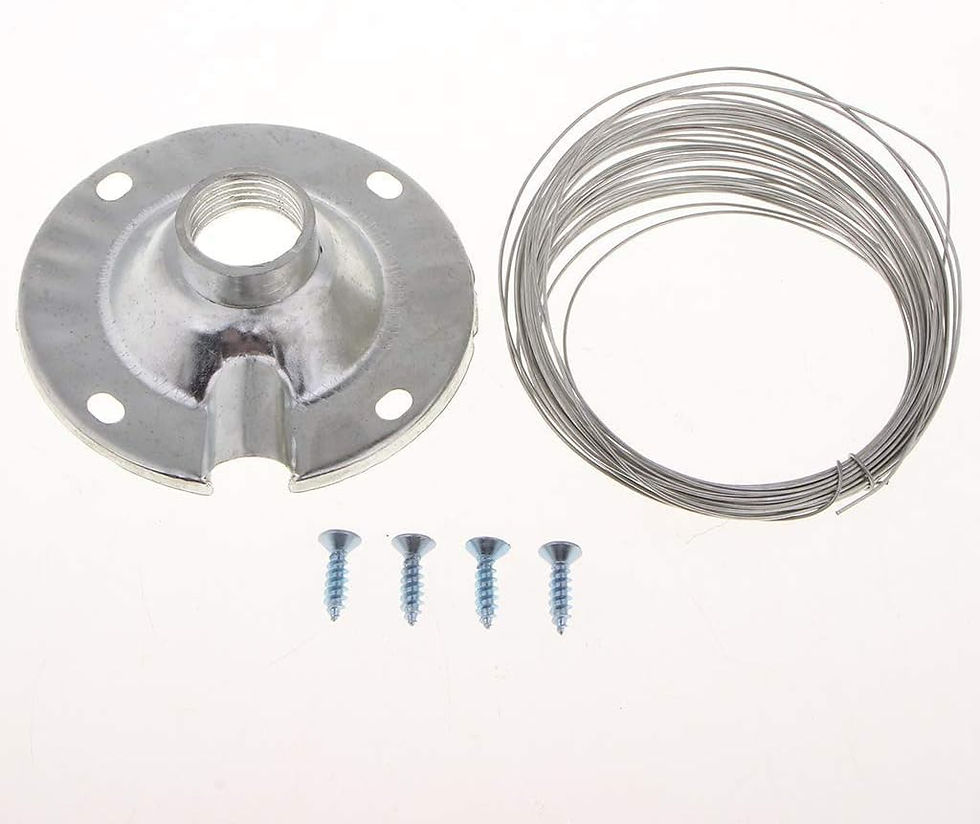
I use 3/4 galvanized tubes of various lengths, which I adapt to the height of the work, I have adapted the pieces to my needs, I can introduce the wire skeleton at the end of the support and adjust it with two screws, this allows me to keep the armature firm, I cover the abdominal area and the head with paper, to lighten the piece.
In the following pictures, I show you the material I usually use to make the armour of my sculptures, as I said each sculpture needs a different armour and you need to adapt it. This is a kit sold on Amazon, quite complete to start playing with the tubes.
I leave you the link. https://amzn.eu/d/7cU5CoR


Armature wire, available in various diameters, is usually easy to bend by hand. Round or square wire is available.


This is an example for a sculpture of 100 cm, where I have put two supports on the sides to give more stability to the sculpture, I use two open sticks that I can remove easily by unscrewing the base. it is made of wire already attached to those supports. I varnish the base to protect the wood, a good idea is to cover it with plastic.
In this armature, I have only used a central support. When preparing an armature for a sculpture that you will later have to hollow out, you always have to take into account gravity, as due to the weight of the clay and little support, the sculpture tends to fall, so you have to look for support points to help keep the sculpture in the position you want it to be.


Grazie, molto utile. Buon lavoro.
Well explained , no doubt, Eva encourages everyone to do things with love and passion