SCULPTING TOOLS
Updated: Jul 6, 2023

When I took my first steps into the world of sculpture, many years ago, everything was much more rudimentary, the tools were simple, and many of them were made by the artists themselves. Nowadays times have changed and we can find a wide variety of tools for all preferences and needs. In my experience, it is good to try several and choose the ones we feel most comfortable with. I feel very comfortable modelling with metal tools, more than with wooden ones. There is nothing written, each artist must find his own way.
But despite personal preferences, each tool has a specific use, and I'm going to talk about it now. Let's start with the basics that should never be missing in the studio.
1. Steal Wire Clay Cutter

A wire is (as the name suggests) a length of wire usually around 1 foot (30cm) long, and often with wooden toggles attached at each end.
It is used for cutting wet clay, and for cutting the sculpture to hollow it out, it produces a clean cut and is easy to control, there are various thicknesses of wire, if we are cutting a slab of clay it doesn't matter how thick it is but when cutting a sculpture it is preferable to use a thin wire so as not to cause the least damage to the sculpture.
2. Knife

Very useful in the first stages of modelling, it helps you to shape the sculpture by removing the excess clay, and roughly outlining the planes of the sculpture. Very practical
3. Sponges

For me, is one of my favourite tools (if you can call it a tool), I use it to smooth the surface of the clay and see how the sculpture is coming along, it helps me to see the piece more clearly and cleanly, especially for me who works with very soft and sticky clay, the sponge helps me to settle the clay and to bring order to the chaos.
4. Kidneys
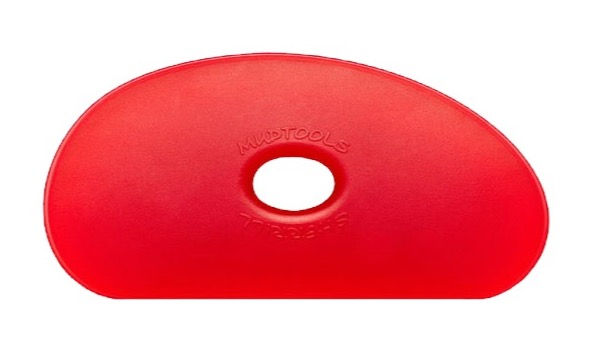
Flat tools come in different shapes and are commonly made from boxwood, though plastic and silicone are also popular materials. They are used to smooth the surface and give them a finer finish.
5. Metal Scraper

These are similar to kidney scrapers but made from metal, they are also used to smooth the surface but because they are harder, you can make cuts and define shapes.
6. Wooden sticks

These are wooden sticks with different shapes at the ends to adapt to the different areas and stages of the sculpting process. They are more suitable for soft clays or plasticine with little adherence, they do not rust and are very light. The best wood to make a modelling tool is boxwood, as it is a very dense wood and at the same time flexible, without porosity, which makes it slide easily in your sculpture.
7. Metal or Stainless-Steel Sculpting Tools

These are my favourites, especially when I am starting to define or work on smaller areas, but the usual is to use wooden sticks, as aluminium or stainless steel tools are used more in modelling clay and wax. It's better to buy stainless steel sticks to avoid rusting, especially when working with wet clay as in my case.
8. Loop tool

These are used in all modelling processes. The loop tool consists of a stick (wood or metal) with a fine round, flat or serrated wire at one end. This tool allows you to make cuts in the piece facilitating and aiding refining, etching, and marking. A loop tool is used mostly to remove controlled amounts of clay when you are hollowing out a sculpture. There are a variety of shapes and sizes.
The choice of size and shape will depend on the work you are doing. The larger ones will generally be used for hollowing out large areas that do not compromise the walls of the sculpture, they will help to remove more clay. The smaller ones will be used to hollow out more complicated areas that require us to be more meticulous, but also to shape or define forms, as many of their shapes will help us to reach where our fingers can't reach.

Round wire: used on soft clays and plasticine, as the material offers no resistance and goes in easily.

Flat wire: they are used in medium-hard plasticine and it is the only way to get into this material, with fine or sharp tools.

Serrated flat wire: used both in clays and plasticine of all hardnesses, its main function is to unify the surface of your sculpture.
9. Mini Loop Tools

They have very fine wires that are used in medium and high-hardness plasticine or in clays when they are in a leather state. They are carving tools that will help you to achieve a great level of detail.
Here are the most common tools for sculpting, there are a lot of variety, shapes and qualities, the choice depends on the needs and preferences of each artist and that can only be discovered with practice.


Comments